Singapore Xenon Market: Import Trend Analysis
In 2024, Singapore`s xenon market experienced a notable increase in imports. The trend reflected a growing demand for xenon within the country, indicating potential market opportunities for suppliers in the industry.
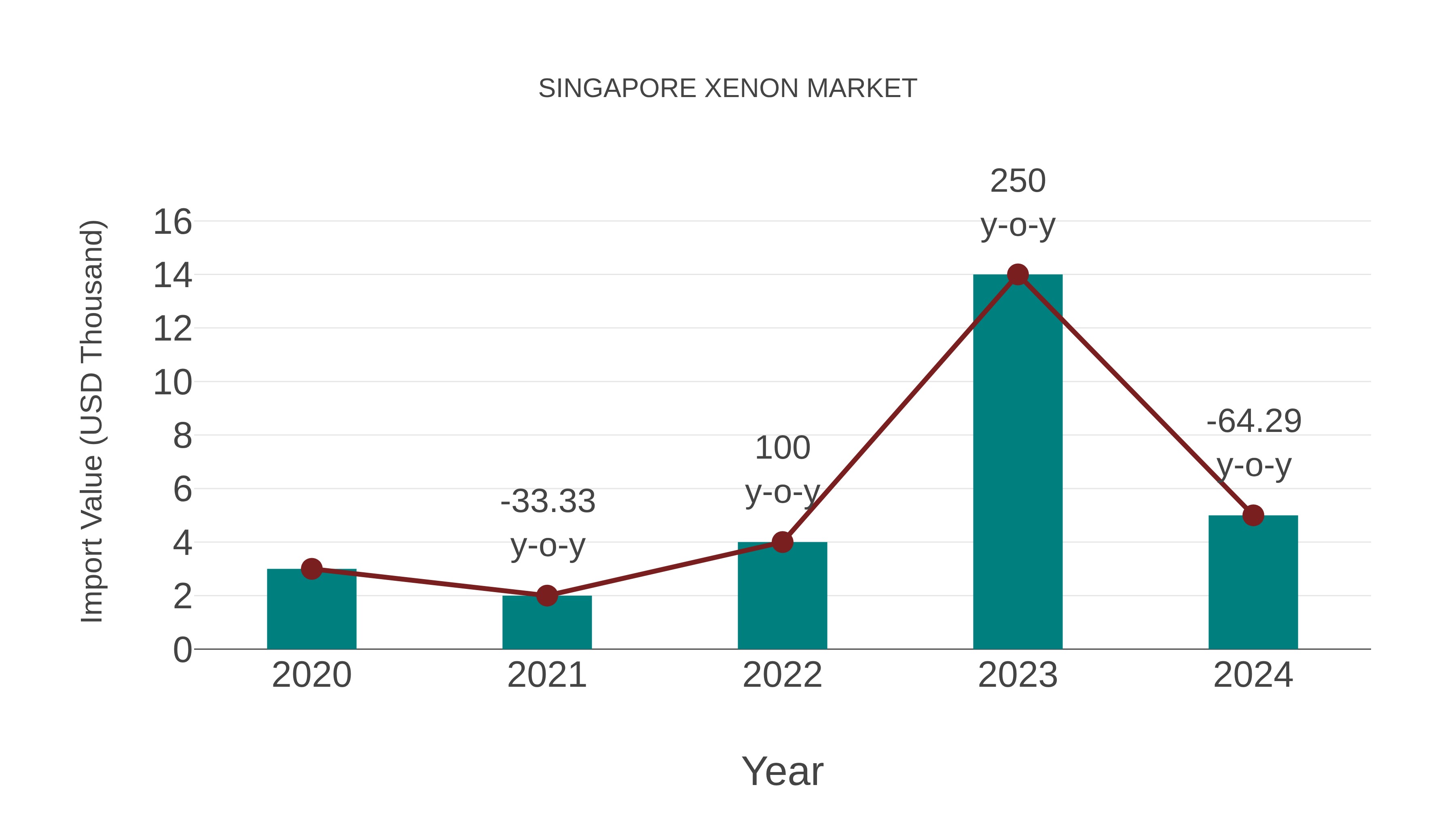
Singapore Xenon Market Synopsis
Xenon, a rare noble gas, is used in various applications, including lighting, medical imaging, and aerospace. The market for xenon in Singapore is relatively niche but has potential for growth, particularly in the medical and aerospace sectors. Continued innovation in lighting technologies and medical equipment may drive demand for xenon gas.
Drivers of the Market
The Singapore xenon market is witnessing growth, fueled by various factors. One of the primary drivers is the increasing use of xenon in diverse applications, including lighting, medical imaging, and aerospace. Singapore advanced manufacturing capabilities and strategic location position it as a key player in the xenon market. Furthermore, the country`s commitment to technological innovation and research and development supports the development of new xenon-based products and applications, contributing to market expansion.
Challenges of the Market
The xenon gas market in Singapore is confronted with challenges related to its limited availability and high production costs. Xenon is a rare and expensive noble gas used in various applications, including lighting and medical imaging. Ensuring a stable supply and managing price volatility is essential. Competition from global xenon suppliers and alternatives such as LED lighting technologies can impact demand. Additionally, the market needs to invest in research and development to explore new applications and expand its customer base. Xenon recycling and recovery methods also need development to address sustainability concerns.
COVID-19 Impact on the Market
The Singapore xenon market faced challenges during the COVID-19 pandemic, particularly in industries like lighting and electronics, where xenon is used. Reduced production and disrupted supply chains impacted the market. However, the long-term outlook remains positive as xenon gas plays a critical role in various applications, including medical imaging and lighting. Technological advancements and the growing healthcare sector in Singapore may drive the demand for xenon in the post-pandemic era.
Key Players in the Market
The xenon market in Singapore is relatively niche but holds potential for growth due to its applications in lighting, electronics, and medical devices. Key players like Praxair, Inc., Airgas, and Iceblick Ltd. have a foothold in the market and are likely to capitalize on emerging opportunities through research and development efforts.
Key Highlights of the Report:
- Singapore Xenon Market Outlook
- Market Size of Singapore Xenon Market, 2025
- Forecast of Singapore Xenon Market, 2032
- Historical Data and Forecast of Singapore Xenon Revenues & Volume for the Period 2022-2032F
- Singapore Xenon Market Trend Evolution
- Singapore Xenon Market Drivers and Challenges
- Singapore Xenon Price Trends
- Singapore Xenon Porter's Five Forces
- Singapore Xenon Industry Life Cycle
- Historical Data and Forecast of Singapore Xenon Market Revenues & Volume By Type for the Period 2022-2032F
- Historical Data and Forecast of Singapore Xenon Market Revenues & Volume By High Purity Xenon for the Period 2022-2032F
- Historical Data and Forecast of Singapore Xenon Market Revenues & Volume By Common Purity Xenon for the Period 2022-2032F
- Historical Data and Forecast of Singapore Xenon Market Revenues & Volume By Application for the Period 2022-2032F
- Historical Data and Forecast of Singapore Xenon Market Revenues & Volume By Semiconductor for the Period 2022-2032F
- Historical Data and Forecast of Singapore Xenon Market Revenues & Volume By PDP Backlighting for the Period 2022-2032F
- Historical Data and Forecast of Singapore Xenon Market Revenues & Volume By Lightings for the Period 2022-2032F
- Historical Data and Forecast of Singapore Xenon Market Revenues & Volume By Medical for the Period 2022-2032F
- Historical Data and Forecast of Singapore Xenon Market Revenues & Volume By Others for the Period 2022-2032F
- Singapore Xenon Import Export Trade Statistics
- Market Opportunity Assessment By Type
- Market Opportunity Assessment By Application
- Singapore Xenon Top Companies Market Share
- Singapore Xenon Competitive Benchmarking By Technical and Operational Parameters
- Singapore Xenon Company Profiles
- Singapore Xenon Key Strategic Recommendations






































