Ghana Sporting and Athletic Goods Market Summary
The ghana sporting and athletic goods market was estimated at USD 1241 Million in 2025 and is projected to reach USD 1789 Million by 2032, growing at a CAGR of 6.3% from 2026 to 2032.
Ghana Sporting and Athletic Goods Market Year-wise Growth Rate and Key Drivers
This graph highlights how the Ghana Sporting and Athletic Goods Market has steadily grown over the past five years, supported by major growth factors.
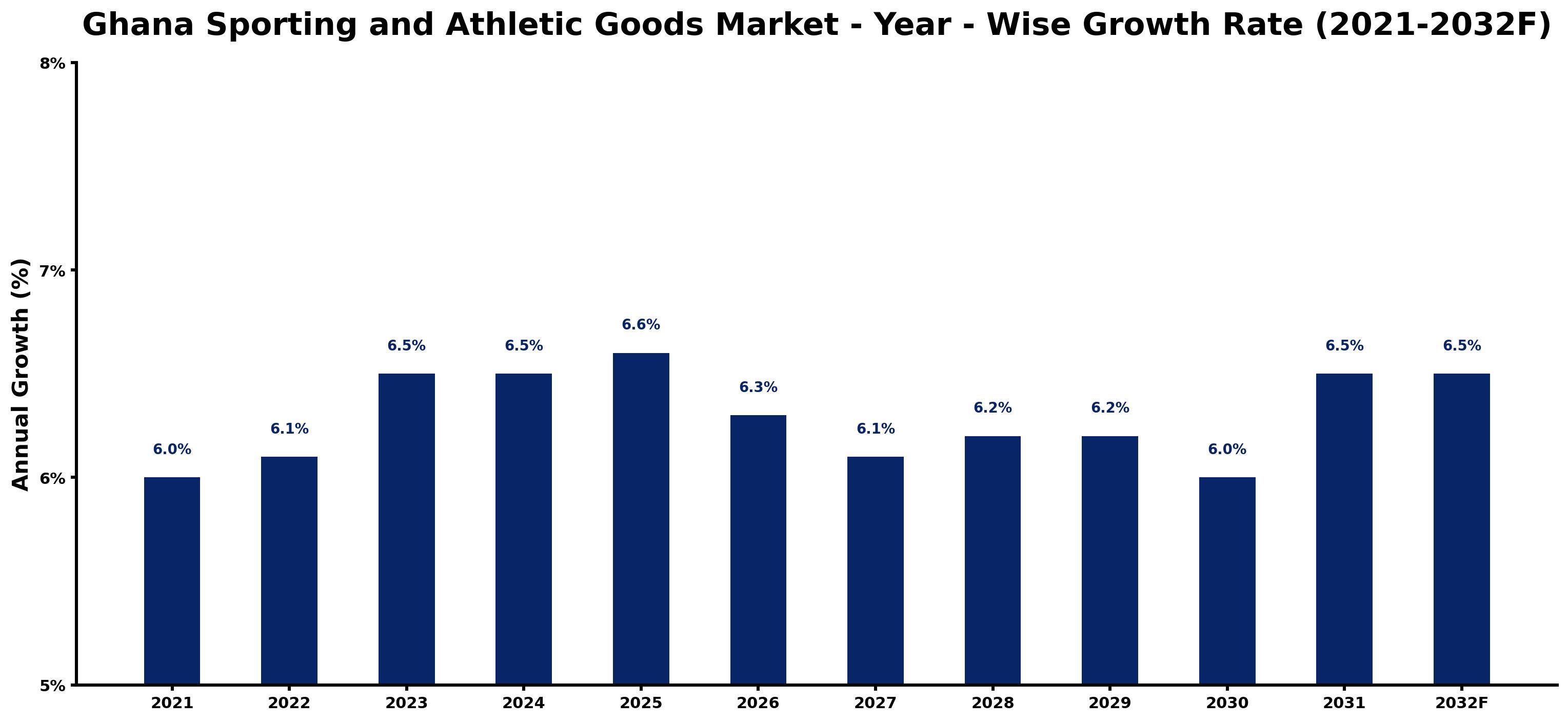
The table below presents the year wise growth rates along with the key drivers influencing the market
| Year | Growth Rate | Major Drivers |
| 2021 | 6.0% | Increased interest in fitness post-COVID reshapes consumer priorities in Ghana. |
| 2022 | 6.1% | Emerging local brands diversify offerings, catering to varied athletic preferences. |
| 2023 | 6.5% | Growing popularity of local sports leagues creates demand for equipment and apparel. |
| 2024 | 6.5% | Youth engagement in football and athletics drives athletic goods purchases significantly. |
| 2025 | 6.6% | Online retail platforms expand, providing greater access to sporting goods nationwide. |
| 2026 | 6.3% | Enhanced urban infrastructure supports better access to sports facilities and equipment. |
| 2027 | 6.1% | Collaborations between brands and local influencers boost awareness of athletic products. |
| 2028 | 6.2% | Rising middle-class income levels lead to increased discretionary spending on fitness. |
| 2029 | 6.2% | Schools and universities implement sports programs, increasing demand for athletic supplies. |
| 2030 | 6.0% | International sporting events in Ghana foster a culture of active lifestyles and participation. |
| 2031 | 6.5% | Technological advancements in materials improve product quality and performance significantly. |
| 2032 | 6.5% | Sustainability trends influence consumer preferences towards eco-friendly sporting goods. |
Note - Market size estimations and growth projections presented in this report are based on 6Wresearch's advanced forecasting approach, validated with industry datasets as of June 2026.
Ghana Sporting and Athletic Goods Market Synopsis
The Ghana Sporting and Athletic Goods Market is projected to reach 6.3% and witness significant growth during the forecast period (2026-2032). Growing health consciousness and rising disposable incomes have set the stage for a robust expansion of the sporting and athletic goods sector in Ghana. The transformation in public outlook toward physical fitness, along with the increasing participation in sports, is a significant driver. Additionally, the youthful demographic profile of the country, coupled with improvements in infrastructure for sporting activities, is expected to further propel market growth. Government initiatives and investments aimed at promoting sports at various levels are also crucial in shaping the future trajectory of this market.
Ghana Sporting and Athletic Goods Market Growth Drivers
Several factors are fostering the growth of the Ghana Sporting and Athletic Goods Market. The following aspects are particularly noteworthy:
- Increased disposable incomes among consumers facilitate greater expenditure on sports and fitness-related products, driving market demand substantially.
- A rising health consciousness among the populace leads to a growing interest in fitness activities, thus boosting the purchase of athletic goods.
- The expanding base of the young population presents a significant market opportunity, as younger generations are more inclined to engage in sports and fitness pursuits.
- Enhanced infrastructure for sporting activities, including improved facilities and accessibility, encourages greater participation in various sports.
- Government-led initiatives, such as sponsored programs and national campaigns promoting sports, serve to stimulate market growth and engagement among citizens.
Ghana Sporting and Athletic Goods Market Distribution Channel Analysis
The distribution landscape of the Ghana Sporting and Athletic Goods Market is evolving with a notable shift toward online sales channels. While traditional offline stores dominate the market, the following points illustrate the changing dynamics:
- Physical retail outlets, including sports stores and dedicated brand establishments, have been the primary distribution channels, providing customers with direct access to products.
- Online sales through e-commerce platforms have seen a significant rise, particularly appealing to the younger, tech-savvy population who prefer the convenience of online shopping.
- Direct sales via manufacturers' websites are gaining traction, allowing consumers to bypass intermediaries and often gain access to exclusive products.
- The enhanced digital penetration supports the growth of the online channel, leveraging social media and digital marketing to reach potential customers effectively.
- As the market continues to evolve, a hybrid approach combining both offline and online channels is strategically advantageous for capturing wider consumer segments.
Ghana Sporting and Athletic Goods Market Government Investment and Initiatives
The Ghanaian government has implemented various policies and initiatives aimed at bolstering the sporting sector. These initiatives reflect a commitment to improving the sporting landscape, including:
- Investment in sports infrastructure, including the construction and refurbishment of stadiums, sports complexes, and training facilities to facilitate enhanced sporting activities.
- Promotion of sports at the grassroots level, encouraging participation among youth through community programs and school sports competitions.
- Initiatives aimed at elevating national teams and athletes through sponsorships and support programs designed to improve performance and representation on international stages.
- Collaboration with private sector players to boost investment in sporting events, fostering a culture of competitive sports.
- Public health campaigns that align with fitness initiatives, creating awareness around the importance of health and wellness through sports engagement.
Ghana Sporting and Athletic Goods Market Latest Developments (May 2025 - June 2026)
Recent developments within the Ghana Sporting and Athletic Goods Market have been characterized by a surge in interest and investment. Key trends observed include:
- Increased partnerships between local sports organizations and international entities have catalyzed knowledge transfer and investment in sports infrastructure.
- A noticeable rise in local sporting events, driven by community engagement efforts, has led to the promotion of various sports and athletic competitions.
- Growing awareness of the mental and physical benefits of sports has resulted in community-based fitness programs gaining popularity across urban and rural regions.
- The introduction of new digital platforms aimed at enhancing consumer engagement has transformed how sporting goods are marketed and sold.
- Attainment of international recognition by local athletes has inspired a younger audience to pursue athletics, thus increasing demand for related goods and services.
Ghana Sporting and Athletic Goods Market - Key Attractiveness of the Report
- 10 Years of Market Numbers
- Historical Data Starting from 2022 to 2025
- Base Year: 2025
- Forecast Data until 2032
- Key Performance Indicators Impacting the Market
- Major Upcoming Developments and Projects
Key Highlights of the Report:
- Ghana Sporting and Athletic Goods Market Outlook
- Market Size of Ghana Sporting and Athletic Goods Market, 2025
- Forecast of Ghana Sporting and Athletic Goods Market, 2032F
- Historical Data and Forecast of Ghana Sporting and Athletic Goods Revenues & Volume for the Period 2022-2032F
- Ghana Sporting and Athletic Goods Market Trend Evolution
- Ghana Sporting and Athletic Goods Market Drivers and Challenges
- Ghana Sporting and Athletic Goods Price Trends
- Ghana Sporting and Athletic Goods Porter's Five Forces
- Ghana Sporting and Athletic Goods Industry Life Cycle
- Historical Data and Forecast of Ghana Sporting and Athletic Goods Market Revenues & Volume By Type for the Period 2022-2032F
- Historical Data and Forecast of Ghana Sporting and Athletic Goods Market Revenues & Volume By Fishing Equipment for the Period 2022-2032F
- Historical Data and Forecast of Ghana Sporting and Athletic Goods Market Revenues & Volume By Skating and Skiing Equipment for the Period 2022-2032F
- Historical Data and Forecast of Ghana Sporting and Athletic Goods Market Revenues & Volume By Golf Equipment for the Period 2022-2032F
- Historical Data and Forecast of Ghana Sporting and Athletic Goods Market Revenues & Volume By Other Sporting Equipment for the Period 2022-2032F
- Historical Data and Forecast of Ghana Sporting and Athletic Goods Market Revenues & Volume By ?Distribution Channel for the Period 2022-2032F
- Historical Data and Forecast of Ghana Sporting and Athletic Goods Market Revenues & Volume By Hypermarket/supermarket for the Period 2022-2032F
- Historical Data and Forecast of Ghana Sporting and Athletic Goods Market Revenues & Volume By Convenience/Departmental Store for the Period 2022-2032F
- Historical Data and Forecast of Ghana Sporting and Athletic Goods Market Revenues & Volume By Specialty Store for the Period 2022-2032F
- Historical Data and Forecast of Ghana Sporting and Athletic Goods Market Revenues & Volume By Online Store for the Period 2022-2032F
- Historical Data and Forecast of Ghana Sporting and Athletic Goods Market Revenues & Volume By Others for the Period 2022-2032F
- Ghana Sporting and Athletic Goods Import Export Trade Statistics
- Market Opportunity Assessment By Type
- Market Opportunity Assessment By ?Distribution Channel
- Ghana Sporting and Athletic Goods Top Companies Market Share
- Ghana Sporting and Athletic Goods Competitive Benchmarking By Technical and Operational Parameters
- Ghana Sporting and Athletic Goods Company Profiles
- Ghana Sporting and Athletic Goods Key Strategic Recommendations






































